

Verdict: The Fourier GR-1 is the heavy-payload industrial workhorse with 50 kg lifting capacity and a proven $125K–$170K sticker price, while the GR-2 is a high-dexterity research platform that trades raw payload (3 kg) for extreme speed (18 km/h) and 53 degrees of freedom including 24‑DOF hands. Choose the GR-1 if you need out-of-the-box lifting muscle for manufacturing; choose the GR ‑2 if your priority is cutting‑edge whole‑body manipulation research on pre‑order.
Fourier Intelligence’s two humanoid flagships sit at opposite ends of the design spectrum: the GR-1 was built from day one to lift, carry, and withstand the rigours of a factory floor, while the GR‑2 is a reimagined athlete built to sprint, juggle, and manipulate tiny objects with surgical precision. Buyers looking at the Fourier GR‑1 and the Fourier GR‑2 are therefore really choosing between two different philosophies of humanoid robotics — a pragmatic, payload‑first tool versus a bleeding‑edge research platform. This article dissects every dimension that matters, from price and availability to payload, speed, software ecosystems, and real‑world deployment, so you can confidently place your order (or your pre‑order).
Quick Verdict: Who Wins? - Best overall value: GR-1 — available now at a known $125K entry point, with class‑leading payload for a humanoid. - Best for heavy‑payload industrial tasks: GR-1 — the only humanoid here that can hoist 50 kg. - Best for research, whole‑body manipulation, and high‑speed locomotion: GR‑2 — unmatched 53 DOF, 18 km/h top speed, and direct NVIDIA Isaac Lab integration. - Best budget pick: GR-1 — $125K base is the lowest verifiable humanoid price in this comparison.
Fourier GR‑1 vs Fourier GR‑2: Specs Compared
| Specification | Fourier GR‑1 | Fourier GR‑2 |
|---|---|---|
| Price (base) | ~$125,000 | Undisclosed (enterprise pre‑order, est. $200,000+) |
| Price (configured) | Up to ~$170,000 | Enterprise negotiation; cited range $200K–$500K |
| Height | 165 cm | 175 cm |
| Weight | 55 kg | 63 kg |
| Payload (both arms) | 50 kg | 3 kg (per hand dexterous manipulation; total body payload not specified) |
| Max speed | 5 km/h | 18 km/h |
| Battery / Runtime | 2 hours | 2 hours (swappable battery) |
| Degrees of Freedom (total) | 40 | 53 (including 24‑DOF hands) |
| IP rating | Not published | Not published |
| Onboard compute | Not published | Open platform; NVIDIA Isaac‑compatible |
| Sensors / LiDAR | Not published | Not published (depth cameras, IMUs stated) |
| SDK languages | Not published | ROS, MuJoCo, NVIDIA Isaac Lab |
| ROS2 support | Likely (not confirmed) | Confirmed (ROS/ROS2 through Isaac ecosystem) |
| Autonomy / fleet software | Not published | Not published |
| Safety certifications | Not published | Not published |
| Availability / lead time | Available (direct inquiry) | Pre‑order (undisclosed timeline) |
| Warranty / support | Not published | Enterprise SLA expected |
“Not published” means the manufacturer has not released the figure publicly; blanks may exist because the robot is still in pre‑order or the spec sheet is enterprise‑only. The payload gap — 50 kg versus 3 kg — is the single biggest differentiator.
Fourier GR‑1: The Industrial Payload Workhorse
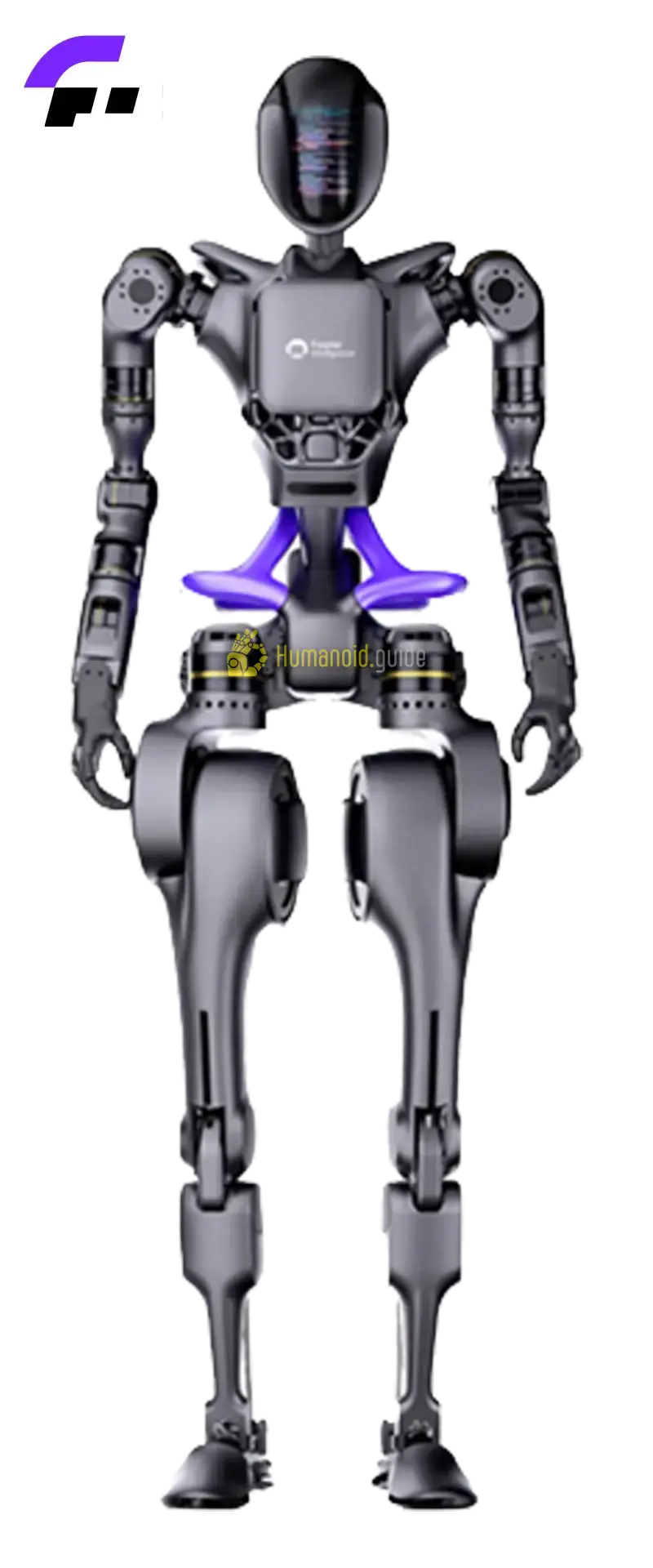
Fourier Intelligence unveiled the GR‑1 in 2023 as its first general‑purpose humanoid, targeting industrial automation and heavy‑material handling. Standing 165 cm tall and weighing 55 kg, the robot’s headline stat is its 50 kg payload — enough to lift an anvil or a fully loaded tool crate and comfortably move it across a warehouse floor. With 40 degrees of freedom distributed across arms, legs, and torso, the GR‑1 achieves human‑like squatting, walking, and carrying motions, though its top speed is a modest 5 km/h. Battery runtime is rated at 2 hours, after which it needs a recharge. Critically, the GR‑1 is available today — buyers can inquire directly with the Shanghai‑based manufacturer, and early adopters have already taken delivery for pilot programs. The base price hovers around $125,000, rising to roughly $170,000 for fully equipped configurations that include advanced perception suites and additional software licenses. This makes the GR‑1 one of the most affordable high‑payload humanoids you can actually purchase in 2026.
Fourier GR‑2: Agility & Dexterity Redefined
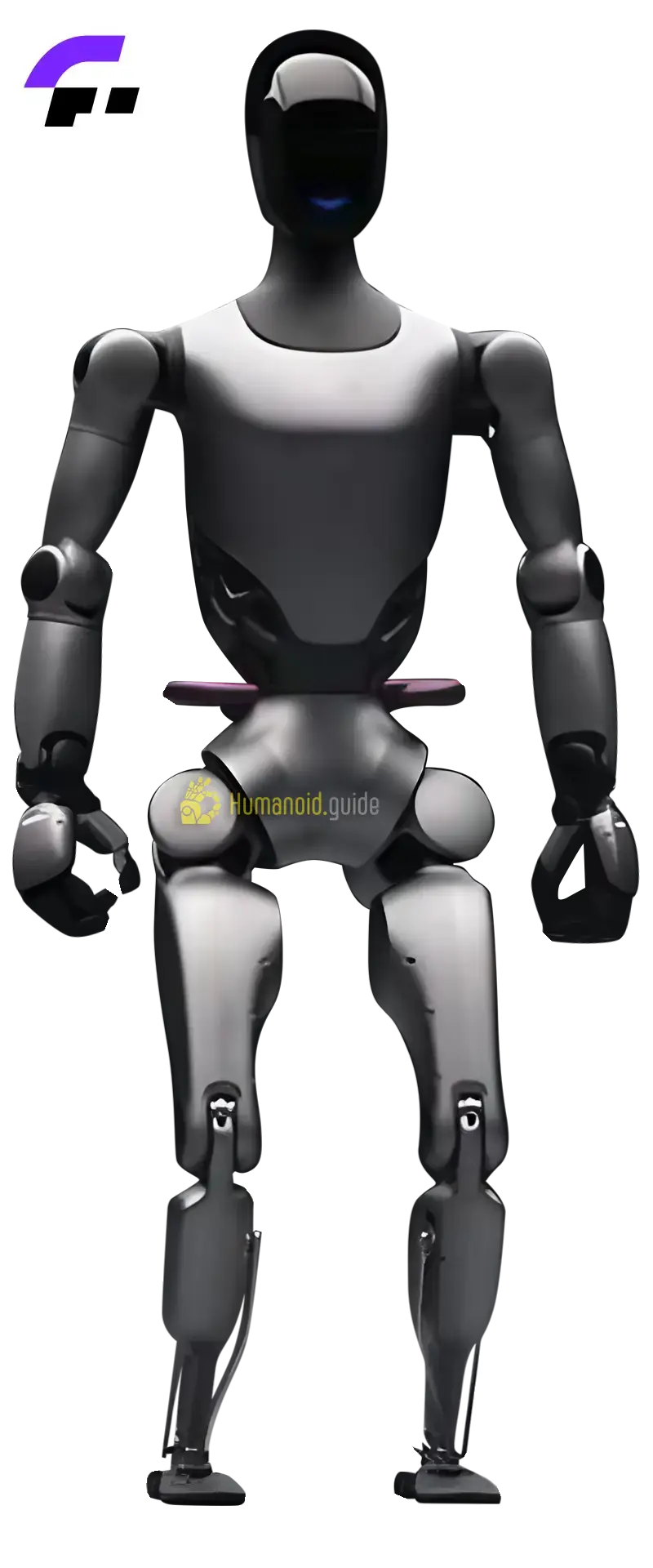
Announced in 2024, the GR‑2 represents a dramatic design pivot. Fourier re‑engineered the humanoid around speed, dexterity, and open‑platform research. The robot grew to 175 cm and 63 kg, yet its payload dropped precipitously to just 3 kg — because that payload is now delivered through a pair of 24‑DOF hands capable of fine‑grain manipulation rather than brute force. The torque budget tells the story: peak joint torque of 380 N·m enables energetic, dynamic motions, and the robot can sprint at 18 km/h, more than three times the GR‑1’s pace. Battery life remains 2 hours, but the pack is now swappable, pulling hot‑swap capability from the mobile‑robot world. The GR‑2 is a pre‑order product with undisclosed pricing; industry analysts suggest a baseline around $200,000, scaling to $500,000 for fully loaded enterprise configurations with custom end‑effectors and NVIDIA Isaac Lab integration. Availability is strictly by enterprise inquiry, and Fourier has not published a firm shipping date, putting the GR‑2 squarely in the “ready‑to‑research” camp for well‑funded labs and early‑adopter manufacturers.
Head‑to‑Head: Price & Configurations
The GR‑1’s pricing is refreshingly transparent: $125,000 entry and ~$170,000 fully optioned. You know what you are paying before you sign. The GR‑2, in contrast, remains a black box. Fourier states pricing is “enterprise pre‑order” only, and no public MSRP exists. Third‑party estimates place the minimum at $200,000, with a predictable upper bound of $500,000 once you add the dexterity‑focused hands, high‑torque actuators, sensor packs, and the open‑platform software stack. Buyer beware: even at $200,000, the GR‑2 costs at least 60% more than a base GR‑1, and you are financing a robot that may not ship for months. For a factory floor that simply needs to move 50‑kg totes, the GR‑1 is the obvious economic choice. For a university lab that must publish next‑generation whole‑body control papers, the GR‑2’s premium buys membership in the NVIDIA Isaac ecosystem and hardware that no competitor currently matches. Winner: GR‑1 for budget certainty and immediate return on investment; GR‑2 for dexterity‑focused research where funding is not the primary constraint.
Head‑to‑Head: Performance & Specs
Payload
The numbers could not be clearer: 50 kg (GR‑1) vs 3 kg (GR‑2). The GR‑1 was engineered to carry heavy tooling, components, and supplies; its arms and torso actuators are sized for industrial loads. The GR‑2 only lifts 3 kg because its hands are optimised for dexterous manipulation of small objects — bolts, sensors, delicate assemblies — and its whole‑body motion is designed for speed, not static holding strength. If your use case involves moving anything heavier than a laptop, the GR‑1 is the only viable choice. Winner: GR‑1.
Speed
The GR‑2’s 18 km/h top speed — roughly a fast human jog — trounces the GR‑1’s walking pace of 5 km/h. On a factory floor, the GR‑1 is unhurried but steady; the GR‑2 could shuttle parts across a facility at three times the rate, provided it is only carrying a 3‑kg payload. Speed is also a proxy for dynamic stability: the GR‑2 can recover from pushes and uneven terrain more aggressively. Winner: GR‑2.
Battery
Both robots quote a 2‑hour runtime. The GR‑2 improves on the GR‑1 with a swappable battery, meaning you can hot‑swap packs on the production floor for continuous operation. The GR‑1 requires power‑down recharging, which eats into uptime. If round‑the‑clock operation matters, the GR‑2’s swappable architecture is a genuine advantage. Winner: GR‑2.
Degrees of Freedom
GR‑1’s 40 DOF versus GR‑2’s 53 DOF tells the architecture story. The extra 13 degrees come from the GR‑2’s highly articulated hands (24 DOF alone) and additional leg/torso joints that enable dynamic running and acrobatic manoeuvres. For tasks like bi‑manual assembly, pipetting, or signing a document, the GR‑2’s hand dexterity is in a different league. For simple pick‑and‑place with a standard gripper, the GR‑1’s DOF count is already generous. Winner: GR‑2 for manipulation complexity.
Head‑to‑Head: Software & SDK Ecosystem
Fourier positions the GR‑2 as an open‑platform research hub: it runs on ROS (Robot Operating System) and integrates natively with NVIDIA Isaac Lab and MuJoCo, giving researchers immediate access to a simulation‑to‑real pipeline and GPU‑accelerated training. The GR‑1’s software stack is less public. Fourier has not published official ROS support for the GR‑1, although early customers are believed to use a lightweight API. If your workflow demands a standard, community‑supported SDK with pre‑trained sim‑to‑real models, the GR‑2 is the only choice; the GR‑1 will require custom middleware development unless Fourier clarifies compatibility. Winner: GR‑2 (by a wide margin for developers and researchers).
Head‑to‑Head: Autonomy & Sensors
Neither robot has published a dedicated autonomy stack spec. The GR‑1 likely carries an in‑house SLAM stack for basic navigation; the GR‑2, with its NVIDIA partnership, is expected to leverage the Isaac AMR fleet‑management and perception pipeline. Sensory hardware details remain undisclosed for both models — depth cameras and IMUs are mentioned but without resolution, field of view, or LiDAR specs. Until Fourier releases detailed sensor sheets, treat autonomy capabilities as dependent on the integrator and the software package chosen. No clear winner emerges here other than the GR‑2’s potential future autonomy via the NVIDIA stack.
Head‑to‑Head: Build Quality & Durability
Neither robot carries an IP rating, and both are designed for indoor, controlled environments. The GR‑1 is heavier (55 kg for a shorter height) and built for repeated heavy lifting, hinting at robust structural components. The GR‑2 is lighter for its height (63 kg at 175 cm) and focused on dynamic motion, which suggests thinner‑walled limbs and higher‑stress joints that will require more careful maintenance. Available data does not let us declare a clear winner, but the GR‑1’s payload‑first design implies a more forgiving mechanical envelope for round‑the‑clock work. Winner: GR‑1 (by design intent, pending published MTBF data).
Price & Total Cost of Ownership
Over a three‑year horizon, the TCO picture depends on utilisation. A base GR‑1 at $125,000, operating 2‑hour shifts with downtime for recharging, will cost roughly $130–150 per operating hour when amortising hardware and support (assuming a $10‑15K annual service contract). The same calculation for a $250,000 GR‑2 (mid‑range estimate) with swappable batteries and likely enterprise SLA could run $200–300 per hour — but that robot may unlock high‑value tasks that a GR‑1 cannot do (e.g., intricate wiring harness assembly). If your dollar votes for moving pallets, the GR‑1’s hourly cost can be justified in weeks. If your dollar votes for publishing a research breakthrough, the GR‑2’s premium is the price of admission to the frontier.
Price winner: GR‑1, by a factor of at least 1.6x on capital and likely more on TCO for standard industrial tasks.
Which Should You Buy? Fourier GR‑1 vs GR‑2 by Use Case
- Choose GR‑1 if: you need a humanoid that lifts up to 50 kg, you operate a manufacturing or logistics facility where heavy payload is the bottleneck, you require a robot you can buy today and integrate into existing workflows, and you want a transparent, known price between $125K and $170K. The GR‑1 is the safe, pragmatic bet.
- Choose GR‑2 if: your domain is advanced robotics research, whole‑body control, human‑like dexterous manipulation, high‑speed locomotion, or any project that benefits from NVIDIA Isaac Lab and a fully open ROS/ROS2 pipeline. You have pre‑order budget (estimate $200K+) and can wait for a unit. The GR‑2 is the trailblazer’s platform.
- Choose neither if: your tasks can be done with a fixed cobot or an AGV — both humanoids are over‑engineered for static pick‑and‑place; consider a Universal Robots arm on a mobile base. Or if outdoor ruggedness is mandatory, look to quadrupeds like Spot or ANYmal, as neither GR‑1 nor GR‑2 carries an IP rating.
Real‑World Deployments & Track Record
The GR‑1 stands on shakier but verifiable ground. Fourier Intelligence has not publicly disclosed unit sales, but early pilot programs have been reported in Chinese manufacturing lines, and direct‑to‑buyer availability since 2023 means some units are in the field. The GR‑2, first shown in late 2024, remains at the pre‑order stage with no known production deployments as of mid‑2026. Both robots lack published operating‑hour data and named end‑customer case studies — a gap that makes any “reliability” judgement speculative. For buyers who need a demonstrable track record, the GR‑1’s two‑year head start gives it a thin but real edge. Winner: GR‑1 (by virtue of being actually available).
SDK, Software & Developer Ecosystem
The GR‑2’s software story is a night‑and‑day improvement. Fourier explicitly lists NVIDIA Isaac Lab, MuJoCo, and ROS as supported platforms, positioning the robot as a sandbox for sim‑to‑real research. Developers can train reinforcement‑learning policies in MuJoCo or Isaac Sim and deploy directly on the hardware — a workflow that is already being used to publish papers on dynamic locomotion. The GR‑1, by contrast, has not published an official SDK. It likely ships with a proprietary control API, and while ROS integration may be possible, it is not a marketed feature. For any buyer whose value lies in software extensibility, the GR‑2’s open ecosystem is a decisive advantage. Winner: GR‑2.
Support, Warranty & Availability
Fourier offers the GR‑1 through direct inquiry with immediate availability; buyers receive the hardware and can negotiate support and warranty terms on a case‑by‑case basis. The GR‑2 is a pre‑order product — enterprises sign a memorandum of understanding, and Fourier builds to order. Warranty terms and delivery timelines are undisclosed. In a build‑or‑buy scenario where time‑to‑floor matters, the GR‑1’s in‑stock status is the tie‑breaker. If you cannot afford a six‑month waitlist, the GR‑1 is the only game in town. Winner: GR‑1.
Comments